
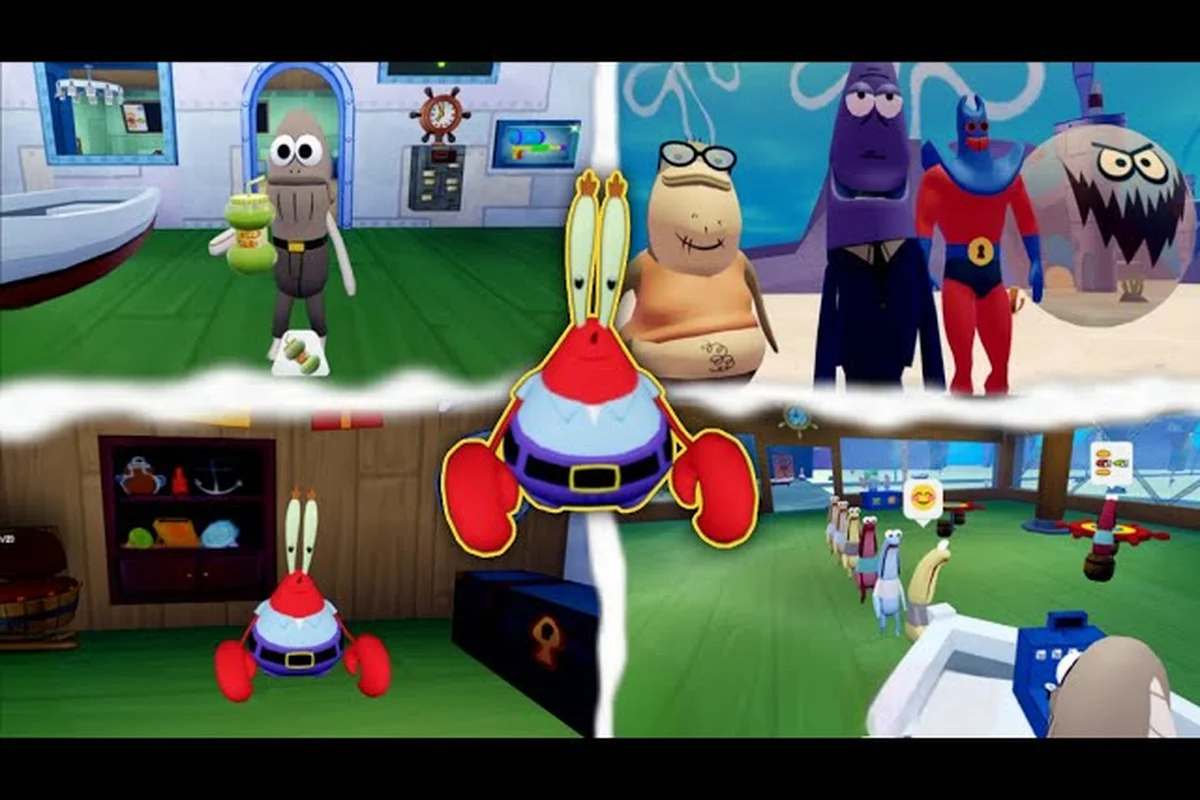
A reliable Save the Krusty Krab day guide matters because every early shift raises the order queue, customer demands, and the cost of small mistakes. Day 2 and Day 3 introduce busier service patterns, so learning when to serve Krabby Patties, manage the central prep area, and reset the fry station can prevent delays from cascading. By Day 5 and Day 10, a repeatable service rhythm—not frantic speed alone—becomes the safest way to protect your customer rating and reach the target with fewer wasted ingredients.
Day 2–10 Overview
The first few shifts in Save the Krusty Krab teach the core management loop: take orders, prepare food correctly, serve customers, clear tables, and deal with interruptions before they become complaints. By Day 10, the restaurant is busier, and a simple queue can grow faster than you can handle it if you neglect prep work, dirty dishes, or a customer who is waiting at the wrong station.
A reliable early-game plan starts with a short preparation routine. Learn the basic flow in the Save the Krusty Krab beginner guide before treating a later day as a test of raw speed. The goal on every shift is not merely to finish the final order; it is to finish cleanly enough that the restaurant keeps its rating and you begin the next day with useful momentum.
| Shift | Main challenge | Priority | Common mistake |
|---|---|---|---|
| Day 2 | More customers than Day 1 | Finish orders and clear tables | Leaving completed tables unattended |
| Day 3 | Mixed order types | Confirm order details | Guessing the requested item |
| Day 4 | Greater customer volume | Keep the queue moving | Starting every new order from scratch |
| Day 5 | Energy and complaint pressure | Prevent mistakes | Ignoring energy restoration |
| Days 6–9 | Busier service rhythm | Balance cooking, serving, and cleaning | Fixating on one customer |
| Day 10 | Peak early-game congestion | Protect the rating | Rushing the final orders |
The numerical details of the day progression are less important than the trend. Customer volume rises, mistakes become more expensive, and the restaurant rating becomes harder to recover. Community field notes describe the rating as a one-to-five-star measure that improves with fast, correct service and falls because of complaints, burned food, missed tables, or villain damage.
The early-game priority system
On Days 2–10, treat the restaurant as a sequence of short operational loops rather than a single long queue. Take the next order, start preparation, clean the nearest table, serve whoever is ready, and return to the customer whose patience is about to expire. This prevents a technically correct order from sitting untouched while another customer becomes a complaint.
Use three practical checks during every shift, but scan the whole restaurant before choosing the next action. If a customer is already waiting at a cleared table, clear and serve that table first; if an order is ready, deliver it immediately; otherwise, begin the next ticket so preparation does not stall. For example, on Day 3, balancing table capacity, completed orders, and the waiting customer can prevent a 1-2 gap between preparation and serving while keeping the Krusty Krab queue moving.
-
Order check: Compare the tray or completed item with the customer’s request before serving.
-
Table check: Clear tables as soon as they become available so new customers can sit.
-
Queue check: Notice which customer is waiting longest and avoid allowing a short order to jump ahead indefinitely.
These checks matter most when the Krusty Krab shifts from a short lunch rush into a crowded afternoon queue, especially around Days 4–5. Use the order, table, and queue checks as a quick prioritization pass: deliver a completed burger before it cools, clear a blocked table to reopen a seat, and address the longest-waiting customer before patience penalties increase. For example, on Day 5, delivering a ready Krabby Patty while one customer waits at a dirty table can preserve both table capacity and customer satisfaction; rushing to prepare another order first may create a wider service gap.
Day 2 Guide
Day 2 is still an early shift, but it introduces enough movement to expose a weak station order. Instead of reacting whenever a customer appears, work in a repeating sequence that reduces wasted steps. Begin with whichever station can unblock the most future actions: usually a completed order waiting for delivery or a dirty table that could delay a new arrival.
Start with a clean baseline
Before taking the first order, check the restaurant for obvious problems. Clear a dirty table, correct any misplaced food, and make sure you know where the order queue is located. This is a small investment in organization that prevents the shift from beginning with a complaint already waiting to happen.
A useful opening sequence looks like this: first finish the short reset at the start of the shift, then enter a continuous service loop so the Krusty Krab never develops a backlog of unattended tables, unstarted orders, or food left cooling on the pass. The key is to choose the next productive task from the current station state rather than wait for a perfect cue: if the order queue is clear, check the dining area; if a customer is waiting, move straight to order-taking; if completed food is ready, deliver it before starting another item. For example, after clearing a table, check for a customer standing near the queue or an available tray before returning to the kitchen. This prevents a busy-looking shift from wasting time on an empty station while the order queue grows.
-
Clear the first available dirty table.
-
Take the next customer’s order.
-
Begin preparing that order immediately.
-
Serve completed food while it is still fresh.
-
Return to the station for the next order instead of idling.
The sequence is not a strict rule for every customer arrangement. Its value is that every action leads to another useful action. A player who clears one table, takes one order, and then wanders without a next step will feel busy while falling behind the actual service queue.
Keep the rating above the queue
The star rating reflects service quality, and community observations consistently connect fast, correct service with better results. On Day 2, the safest way to protect it is to avoid making avoidable errors. Read each request carefully, confirm the item, and do not let a customer wait beside a completed order without noticing.
| Day 2 situation | Better response | Why it helps |
|---|---|---|
| A table is dirty and a customer is waiting | Take the order, start preparation, then clear the table | Prevents the restaurant from losing usable seats |
| Food is ready but the customer has moved | Deliver before starting another order | Removes an easy complaint and prevents confusion |
| Several customers arrive together | Process them in order, while preparing the first order | Keeps the queue understandable |
| You are unsure about an order | Check the order details before serving | Avoids a wasted item and a lower rating |
Do not expect every early shift to be effortless. The goal is to build a habit before the restaurant becomes crowded. By the end of Day 2, you should be able to answer the question of where the next bottleneck is: cooking speed, table availability, or delivery timing. That answer becomes the basis for the next day’s plan.
Day 3 Guide
Day 3 makes order accuracy more important because multiple customer types can appear in the same service window. The Save the Krusty Krab day 3 guide should focus on queue ownership: know which customer belongs to which order, and never leave a request hanging without a next action.
Check out this FoltynPlays community gameplay video for a look at how a normal shift plays out.
Match preparation to the customer
When you accept an order, connect it to the customer immediately. The most reliable method is to keep the order visible and confirm the item at the preparation station. If the game provides a visual order indicator, use it rather than relying on memory; if the order is less obvious, repeat the request to yourself before starting.
Customer behavior also matters. The Save the Krusty Krab customer types guide explains the role of special customers, including Plankton and Dirty Bubble. Even when a regular order is ready, a special customer can create a larger problem if left unattended for too long. Treat unusual requests as priorities when they begin to affect the restaurant’s normal flow.
| Customer situation | Action | Priority reason |
|---|---|---|
| A regular customer has a simple order | Prepare normally, but keep the order identified | Routine business should continue |
| A special customer arrives | Read the request and watch for trouble | Their behavior may disrupt nearby service |
| Two customers want the same item | Complete each order independently | One error can affect both deliveries |
| A customer is ready while food is still cooking | Take another order or clean a table | Use the wait productively |
Prevent order confusion
The biggest avoidable mistake on Day 3 is not lack of speed; it is serving the right thing to the wrong person. Before handing over an item, check the customer’s order. If two orders are similar, use the order indicator or other available visual cue to distinguish them.
Use a simple staging system: keep the active order ticket separate from completed orders, and place the next order only after the current meal is handed over. For example, if two Day 3 customers request Krabby Patties, use their order indicators to match the correct ticket before preparing the second item; this prevents a fast queue from turning a small mix-up into a missed delivery, a complaint, or lost service time.
-
Accept one order and remember its visual identifier.
-
Start the preparation immediately.
-
Keep completed orders away from new ones until delivery.
-
Check the identifier once more at the serving point.
-
Deliver the order before beginning another item when possible.
This routine matters more on Day 3 than on Day 2 because the growing customer queue can make a temporary mistake harder to isolate. If you accidentally serve the wrong meal, the damage may spread through a complaint, a lower rating, and lost time while recovering.
Day 4 Guide
Day 4 is where a good early rhythm starts to matter. Customers are more numerous, and every station competes for attention. The Save the Krusty Krab day 4 guide is less about discovering new systems and more about making your existing routine fast enough to handle a crowded restaurant without turning mistakes into a chain reaction.
Build a station cycle
Think of the restaurant as four linked stations: order, preparation, delivery, and cleanup. A station cycle works best when you can move from one action to the next without abandoning a task halfway through. The exact route depends on the layout, but the principle remains consistent: preparation creates future work, while serving and cleaning remove pressure from the queue.
| Station | Start action | Finish action |
|---|---|---|
| Order point | Accept a request | Identify the customer and item |
| Preparation | Gather or cook the item | Confirm it is correct and complete |
| Delivery | Pick up the finished order | Verify the customer before serving |
| Cleanup | Notice a dirty table | Remove it before seating pressure builds |
Do not wait until every station is full before acting. If the preparation station is backed up, finish the order already in progress. If the dining area is crowded, clear a table while waiting for food. If a customer is ready, deliver immediately. This is a simple way to keep the restaurant moving when the player’s attention is divided.
Use mistakes as system feedback
A mistake on Day 4 should change your sequence, not just your score. If you missed a table, add a table scan to your return path. If you served the wrong item, slow down for one verification at the delivery point. If you ran out of energy, reduce unnecessary movement by handling nearby tasks before crossing the restaurant.
The goal is not to create a flawless run through force. It is to reduce the number of decisions made under pressure. By Day 4, a player who can recognize their recurring error will usually progress farther than a player who simply tries to move faster.
Day 5 Guide
Day 5 is the midpoint of the early progression and a good place to establish energy discipline. The Save the Krusty Krab day 5 guide should emphasize prevention. Energy is drained by mistakes and villain effects, and community field notes indicate that clean play prevents most unnecessary drain. Exact energy-cap and drain figures are not published consistently, so avoid treating a specific number as official.
Treat energy as a service resource
Energy affects how long you can keep working without costly mistakes. Do not wait until the resource is nearly gone to change your behavior. Earlier in the shift, remove simple sources of loss: avoid unnecessary trips, clear obstacles, serve correct orders, and deal with disruptive customers before they affect nearby stations.
Energy loss is more expensive than a brief pause. A wrong order can require replacement work, customer recovery, and extra movement. That is why prevention is the best energy strategy. The resource is valuable precisely because mistakes cost more than the time it takes to avoid them.
| Energy situation | Better plan | Long-term benefit |
|---|---|---|
| Energy is comfortable | Work normally, but scan for hazards | Preserve a margin for later orders |
| Energy is declining | Finish nearby tasks and avoid risky movements | Reduce mistake frequency |
| A villain effect is active | Prioritize containment or customer safety | Limit disruption to the queue |
| Energy is low | Slow down, simplify order checks, and use available restoration | Avoid a cascade of errors |
Use restoration at the right moment
Kelp shakes are identified by community field notes as an energy-restoration item. Treat them as a useful pickup when encountered, but do not turn them into a substitute for good execution. A player who relies on constant restoration may still lose time, create complaints, and finish the shift with a weak rating.
The most effective approach is prevention first, restoration second. On Day 5, prioritize keeping the order queue moving before using every available resource to clear the current batch; this preserves time for sudden customer surges and reduces the risk of complaints. For example, if several orders are already underway, collect a Kelp Shake when it is encountered rather than interrupting the flow for repeated restoration. Finish the shift with enough energy to handle a last-minute rush, because a strong ending rating depends more on sustained execution and queue control than on a brief cleanup at the start.
Day 10 Guide
Day 10 is the endpoint of this early-game guide, and it is usually more congested than the opening shifts. The Save the Krusty Krab day 10 guide should not promise a specific customer count, customer-growth curve, or exact minute limit because those figures are not consistently published. Instead, focus on the reliable progression trend: more work, fewer spare seconds, and a greater cost for mistakes.
Control the busiest parts of the shift
A Day 10 customer can arrive while you are cooking, cleaning, or recovering from a previous error. The answer is prioritization. Identify the task that protects the largest number of future actions, complete it, and then return to the next customer in order.
During a Day 10 rush, treat the priority queue as a live decision rather than a fixed checklist. For example, if one customer’s Krabby Patty is nearly finished while another table blocks the aisle, finish the cookable order first, then clear the table if movement is affected. If a customer has already waited through several order cycles, pause only if the next action can prevent a larger backlog; otherwise, deliver the older order before starting a fresh one.
-
Handle an immediate danger to customers or the restaurant.
-
Deliver a completed order to the matching customer.
-
Clear a table when it blocks seating or movement.
-
Start the next valid order.
-
Finish small cleanup tasks during natural waiting moments.
This does not mean ignoring a customer with a long wait. It means using order age, table pressure, and station readiness together. A completed order left untouched can become a complaint quickly, while a table may be cleaned during a brief preparation interval.
Prepare for the next phase
Reaching Day 10 is not the same as mastering the entire game. It means your routine can survive rising pressure. If your rating is strong, keep practicing the same clean sequence rather than changing routines after every bad shift. If your rating is weak, identify the most common error—wrong items, missed tables, slow delivery, or complaint handling—and correct that single issue first.
For later shifts, the Save the Krusty Krab day 20 guide becomes relevant because the restaurant will continue to demand faster decisions. The foundation is still the same: a clear station order, accurate orders, clean tables, and controlled energy.
Day Guide Checklist and Priorities
The Save the Krusty Krab day guide comes down to a short list of priorities that remain useful from Day 2 through Day 10. Use the checklist before each shift and after major mistakes. Its purpose is to prevent small errors from accumulating while the restaurant gets busier.
-
Start clean: Clear an available table and identify any immediate hazard.
-
Accept deliberately: Confirm the order and connect it to the correct customer.
-
Prepare continuously: Start the next order as soon as the current station allows it.
-
Deliver promptly: Verify the item, then hand it to the matching customer.
-
Clean during waits: Use brief pauses to remove tables and obstacles.
-
Protect energy: Prevent avoidable mistakes before relying on restoration items.
-
Watch for special customers: Respond early to behavior that can interrupt normal service.
-
Learn from errors: Adjust the routine rather than repeating the same mistake.
| Priority | Immediate action | Result |
|---|---|---|
| Safety | Clear hazards and contain villain effects | Fewer disruptions and energy losses |
| Accuracy | Confirm customer and item | Fewer complaints and wasted food |
| Flow | Keep preparation, delivery, and cleanup moving | Shorter effective queue |
| Rating | Balance speed with correctness | More reliable settlement results |
The rating-first rule is especially useful: a slower but correct order usually supports the restaurant better than a fast error. The clean-first rule is equally important, because dirty tables and unresolved customers create additional work. Together, these rules make the early progression feel manageable without pretending that every shift is identical.
How Many Days and Progression
Save the Krusty Krab how many days questions are best answered by focusing on progression rather than a guaranteed endpoint. The early days provide a training sequence: Day 2 teaches the rhythm, Day 3 tests order recognition, Day 4 raises congestion, Day 5 tests energy control, and Day 10 combines those lessons under pressure.
There is no reliable basis in the supplied community data for stating an exact maximum day count, daily revenue total, or guaranteed final rating. The restaurant’s progression is shaped by player performance, customer handling, and the recurring disruptions that reduce energy. That means two players can reach different results even when they begin on the same numbered day.
The practical target is not a specific number. It is a repeatable shift in which you can maintain acceptable service, recover from mistakes, and enter the next day with momentum. If you want additional preparation for a higher-day run, the Save the Krusty Krab nasty patty guide can help with longer-run priorities, but the early-day fundamentals still matter.
A repeatable end-of-shift review
After each day, write down three things: the most common error, the station where time was lost, and whether energy remained stable. This review is more useful than judging the day only by its final rating because it points to the next practical adjustment.
| Review question | What to look for | Next adjustment |
|---|---|---|
| What failed most often? | Wrong item, missed table, or complaint | Add one verification at the relevant station |
| Where did time disappear? | Walking, searching, or waiting | Reorder nearby tasks |
| Was energy stable? | Frequent errors or restoration use | Slow down and prevent losses |
| Did the queue stay visible? | Multiple forgotten customers | Keep a fixed queue-check rhythm |
The daily review loop turns progression into deliberate practice. Instead of repeating the same routine after every rough shift, you adjust one point and test it the next day. That is the safest way to move from Day 2 toward Day 10 and beyond.
Frequently Asked Questions
How many days are in Save the Krusty Krab?
Save the Krusty Krab has no reliable published day count in the supplied community data, so claims about a specific maximum should be treated cautiously. Progression continues through rising customer pressure, and your available day depends on restaurant performance, energy management, and how well you prevent complaints. The Day 2–10 guide focuses on the verified early progression pattern rather than an unconfirmed endpoint.
What should I prioritize on Day 2 in Save the Krusty Krab?
On Day 2, prioritize a clean service loop: take an order, prepare it, serve the correct customer, and clear available tables without wandering. Early mistakes are easier to correct when tables and orders remain manageable. By the end of the shift, identify whether cooking, delivery, or seating caused the most delay so you can improve the sequence on Day 3.
How do I maintain five stars during Days 3–5?
Maintain five stars by combining quick delivery with careful order verification. Watch the queue, clear tables before they create seating pressure, and prevent mistakes that drain energy. Days 3–5 become harder because customer volume and interruptions increase, so use waiting time for nearby cleanup and treat special customers as early priorities rather than reactive problems.
What is the best strategy for reaching Day 10?
Use a fixed station cycle, keep completed orders associated with their customers, and prevent recurring errors before they drain energy. On Day 10, prioritize immediate dangers, ready deliveries, and tables that block movement, then return to the oldest valid order. Exact customer numbers and timing thresholds are not consistently published, so focus on the progression trend rather than unverified timers.
Can energy management help me reach later days?
Yes. Energy management helps because mistakes and villain effects consume energy, while clean service prevents avoidable loss. Use restoration items such as available kelp shakes as support, but do not rely on them to repair a weak routine. Finish nearby tasks, confirm orders before serving, and remove hazards early so your energy margin survives the increasing workload.