
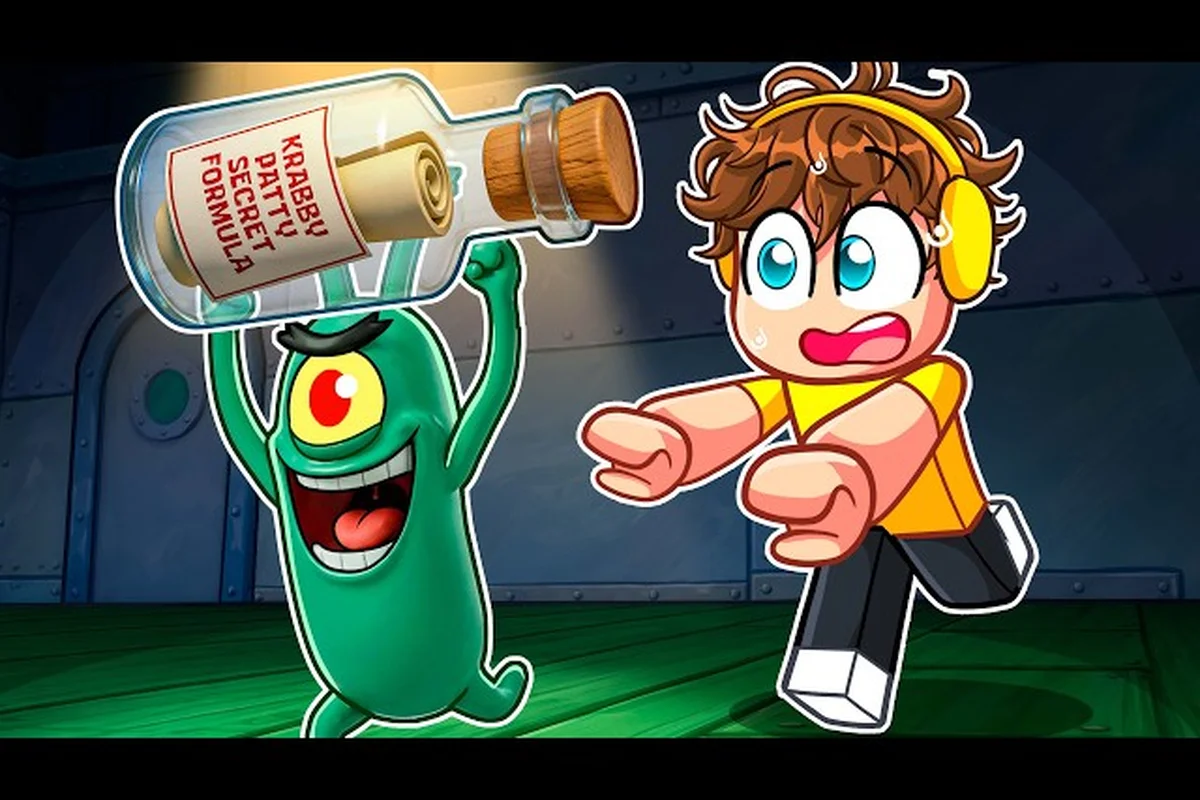
Save the Krusty Krab priority customers determine which guest needs attention first, and mastering their order protects customer patience, prevents complaints, and keeps the shift moving through villain interruptions.
How Save the Krusty Krab Priority Customers Work
Save the Krusty Krab priority customers are not described through a published numeric order, fixed timer, or official spawn table. Instead, the game communicates urgency through visible guest behavior: angry customers, impatient customers, dirty tables, and special visitors can all demand attention at once. This makes the priority system an observation-and-triage task rather than a simple queue that always follows the customer who arrived first.
The key distinction is between urgency and importance. A customer who has already complained may need immediate attention, while a messy table can wait if the dining area is still quiet. A customer who seems calm may also become urgent when patience drains, so players should watch changes in posture, expressions, and table status instead of assuming every guest is equally forgiving.
| Observable situation | Immediate priority | Reason for the decision | Useful next action |
|---|---|---|---|
| Guest is visibly angry | Very high | Anger can escalate into a complaint or removal | Clear the order, clean the table, or remove the guest if the situation cannot be fixed |
| Customer is losing patience | High | Waiting can reduce satisfaction before service begins | Serve or seat the customer as soon as the active step is available |
| Table is dirty and occupied | Medium to high | A dirty table slows the next service cycle | Clean it when no more urgent customer action is pending |
| Ordinary customer is waiting | Normal | The guest can still be served without immediate crisis | Prepare the next order and preserve the service flow |
| Villain interruption is active | Context-dependent | The interruption may block movement or create a new threat | Follow the villain counter if it is more urgent than the current guest |
Community field notes describe villains arriving as mid-shift interruptions, while also warning that exact timing and priority order are unverified. That distinction matters: a villain should not automatically replace a preventable complaint, but a water gun villain may demand an immediate response when the customer queue is already fragile.
Reading Angry and Impatient Guests
The Save the Krusty Krab angry customers system is easiest to use when players divide visible signs into three stages. The first stage is a warning: a guest may look restless, change direction, or show that an order has been waiting. The second stage is active dissatisfaction, indicated by a clearly angry presentation. The third stage is a complaint, which represents a failed service interaction and potentially a lost customer.
These stages are visual rather than numeric because no verified formula explains patience depletion, complaint timing, or the star-rating calculation. As community field notes state, the underlying values are not published by the developer or supported by a consistent public dataset. Treat any exact minutes, percentages, or burn thresholds circulating in player discussions as unverified estimates, not fixed rules.
Why Order Matters
A priority mistake creates a chain reaction. A neglected customer can become angry, a dirty table can remain in service, and a villain can interrupt the player while the restaurant is already crowded. Handling the highest-risk guest first prevents several small problems from compounding into a multi-problem recovery.
The Save the Krusty Krab customer patience system should therefore be managed as a changing condition rather than a countdown you can predict. Players who continually check the room can redirect attention before a routine wait becomes a complaint, while players who focus only on the newest arrival can accidentally leave a critical problem unattended.
Handling Save the Krusty Krab Angry Customers
Angry customers should be treated as a separate service category. A normal guest asks for a sequence of restaurant tasks, while an angry guest may add time pressure, require extra cleanup, or force a decision about whether the relationship can be repaired. The response should begin by identifying the source of the problem: an unserved order, a dirty table, a long wait, or an interruption that delayed service.
A Four-Step Anger Response
-
Identify the blocked action. Determine whether the customer is waiting for an order, waiting for a table, reacting to mess, or standing near an active villain.
-
Remove the immediate friction. If the player can safely complete the task, do it before starting a longer action elsewhere.
-
Recheck the guest after each action. The customer's visible state should be watched for improvement, no change, or escalation.
-
Choose repair or removal. Continue service if the problem is fixable; use the available removal option when the customer is already beyond recovery and continues to disrupt the restaurant.
This process keeps the Save the Krusty Krab customer complaints from becoming routine. It also prevents the opposite mistake, where players remove a customer who could have been calmed by completing one neglected task. Removal is a response to an unresolvable service failure, not the default response to impatience.
| Anger signal | Likely service problem | Preferred response | When to remove the customer |
|---|---|---|---|
| Irritated while an order is pending | Slow preparation or service | Complete the order promptly | The order is unavailable and the customer remains disruptive |
| Anger appears at a messy table | Hygiene or cleanup issue | Clean the table and serve correctly | The customer refuses recovery and continues obstructing service |
| Anger follows a villain interruption | Environmental disruption | Resolve the immediate danger, then resume service | The guest remains hostile after normal service resumes |
| Repeated switching between guests | Attention is being split | Choose the most urgent actionable guest | Repeated failures continue to reduce restaurant stability |
When Save the Krusty Krab Kick Customers Out Is Appropriate
Save the Krusty Krab kick customers out decisions should follow a simple rule: attempt one direct recovery, then evaluate the result. If the customer is angry because a specific task was left incomplete, completing that task is the recovery. If the customer remains hostile, blocks the path, or continues generating a complaint after normal service resumes, removal becomes a practical restaurant-management decision.
This is especially important during busy periods. Keeping one impossible customer does not necessarily improve satisfaction if that presence prevents several other guests from being served. The relevant comparison is not whether every guest remains in the restaurant; it is whether the action produces a better overall service state.
Community reports describe the removal option as a tool for difficult customers, but exact tolerance values and removal consequences are not consistently verified. Players should rely on the outcome visible in the current run rather than a universal threshold. If removal causes another customer complaint or reduces the restaurant's overall state, it was not the best decision even if the hostile guest disappeared.
Preserving Save the Krusty Krab Customer Patience
Customer patience is easiest to protect by reducing avoidable waiting. Complete the current task cleanly, look toward the next likely request, and keep the restaurant from developing overlapping problems. The most useful preparation is not memorizing a fixed route; it is recognizing the next required service step while a customer is still calm.
Preventing Complaints Before They Start
A complaint becomes easier to avoid when the player addresses the cause of impatience rather than merely reacting to an angry animation. Scan the dining area before starting a long task, especially when a guest has stopped moving or changed position. Look for an open table, a misplaced tray, a dirty surface, or a customer whose order has not yet been completed.
The Save the Krusty Krab customer patience system responds to service flow, so spacing tasks can matter. Avoid starting a low-priority action when a calm customer is one action away from becoming angry. If a guest is already irritated, finish the shortest useful service chain first, then return to routine preparation. This creates a visible rhythm of completion rather than a pattern of partial service.
| Service state | Likely effect | Prevention priority | Recovery priority |
|---|---|---|---|
| One calm guest is waiting | Small patience drain | Normal | Low |
| Several calm guests are waiting | Competing demands | High | Medium |
| One guest is visibly impatient | Faster risk of anger | Very high | High |
| One guest is angry and another is waiting | Cascading service risk | Immediate | Very high |
| A villain blocks the active area | Wider flow disruption | High until resolved | Very high during the interruption |
Turning Priorities into a Shift Plan
At the start of a shift, identify the most restricted work area and the nearest available service station. During the shift, check guests in this order: angry first, impatient second, blocked or dirty third, and calm customers last. After each service, confirm that the table is usable and the next guest can proceed.
The Save the Krusty Krab customer complaints are easier to prevent when players understand that each table represents a chain of tasks. Serving food is only one part; leaving a table dirty delays the next customer even if the order itself was completed. Cleaning a table at the right moment can therefore protect more patience than immediately starting another meal.
For a broader look at queue behavior and cleaning pressure, the Save the Krusty Krab table cleaning customers guide explains how dirty tables affect the service cycle. The useful principle carries directly into priority handling: a cleanup task becomes urgent when it blocks a guest or delays the next natural service step.
Responding to Save the Krusty Krab Water Gun Villains
The Save the Krusty Krab water gun villains are interruptions rather than normal customers. They should be evaluated by immediate danger, reach, and effect on the current service chain. A villain that threatens the active path can turn a manageable customer problem into a complaint, especially when the player must stop mid-task.
Community footage, including Zaku's villain-focused video on YouTube, provides visual examples of villain encounters. The footage is useful for recognizing appearances, but it does not establish a universal spawn schedule. No official priority list, spawn probability, or exact interval has been published.
Villain Triage
When a villain appears, determine whether it is blocking the customer, blocking the player, or creating a separate hazard. Then choose the shortest reliable counter. Players who waste time running a long route while a customer remains blocked can turn a temporary interruption into a full complaint. Those who ignore a dangerous enemy can allow tables or service stations to remain inaccessible.
| Villain situation | Customer priority | Villain response | Post-intervention check |
|---|---|---|---|
| Villain is away from guests and does not block a route | Continue the current service step | Address it before it closes distance | Check for any newly affected customer |
| Villain blocks movement near an impatient guest | Serve the guest only if the action remains possible | Remove the obstacle first | Recheck guest state and table condition |
| Villain interrupts an active order | Continue the order if safe | Defend or counter the villain | Resume service without leaving the table unfinished |
| Multiple guests are angry during the interruption | No customer can be safely ignored | Stabilize the room, then resume priority order | Address the angriest remaining guest |
Balancing Villains and Customer Service
The main danger is treating the villain encounter as an all-or-nothing distraction. The correct priority depends on whether the interruption directly changes the service flow. If it does, handle it immediately. If it does not, finish the active customer action first, especially when that action is one step from completion and another customer is already losing patience.
The Save the Krusty Krab water gun villains should not be assigned a universal priority above every guest. Community observations show that they can arrive as mid-shift interruptions, but no reliable dataset confirms a fixed schedule or order. Use current visible conditions instead. A villain near an angry customer may be more urgent than one standing in a distant corner, while a villain that blocks a crowded aisle can affect several service lines at once.
Priority Customer Decision Guide
The best priority system combines urgency, recoverability, and flow. Urgency identifies who may become angry soonest. Recoverability identifies who can still be helped through normal service. Flow identifies which action will unblock the greatest number of later actions. A player who considers all three can make better decisions than one who reacts only to the loudest visual cue.
Scoring a Customer Without Fake Numbers
Because no official formula for patience, anger, or complaints is available, use qualitative tiers rather than invented percentages. A three-tier model is enough for most situations: red for guests requiring immediate action, amber for guests whose next service step should be prioritized, and green for guests who can wait briefly.
| Priority tier | Trigger | Player response | Delay risk |
|---|---|---|---|
| Red | Angry customer, active complaint, or blocked service | Resolve or remove the problem now | High and spreading |
| Amber | Impatient customer, dirty occupied table, or several waiting guests | Prepare the next action and complete it promptly | Medium |
| Green | Calm customer with a clear next step | Handle in normal rotation | Low unless ignored |
| Context override | Villain blocks the service path | Stabilize access before resuming the queue | Varies with location |
This is a decision framework, not a claim about hidden game values. The Red-Amber-Green Triage method reflects what can be observed during play. It helps prevent the common mistake of serving the nearest guest while a more fragile customer is left unattended elsewhere in the room.
Comparing Service Actions
Before acting, compare the result of each available action. Completing a pending order may produce immediate satisfaction. Cleaning a table may prevent a future delay. Removing an unresolvable guest may restore flow. Countering a villain may reopen a route needed for both current and future service.
| Action | Immediate benefit | Secondary benefit | Main mistake to avoid |
|---|---|---|---|
| Serve a waiting guest | Reduces impatience | Frees a service slot | Starting a longer task elsewhere first |
| Clean a table | Restores a usable station | Prevents a later bottleneck | Cleaning a low-traffic table during a crisis |
| Remove a hostile guest | Stops continued disruption | Opens the floor to other guests | Removing a customer who needed one service action |
| Counter a villain | Protects the active area | Prevents cascading interruptions | Chasing a distant villain while a guest deteriorates |
What to Do When Several Guests Need Help
Start with the customer whose deterioration would create the largest chain reaction. That may be the visibly angry guest, but it may also be the guest blocking a busy route or occupying a table that several others need. After resolving the first issue, rescan the room because removing one blocker can reveal a more urgent customer behind it.
The Save the Krusty Krab priority customers approach becomes more reliable when players reevaluate instead of following a rigid personal order. A calm guest can become amber while a villain is handled, and a previously unthreatening table can become the most valuable cleanup target. Frequent scanning is the practical replacement for an official priority list that does not exist.
For a deeper comparison of the most disruptive encounters, read the Save the Krusty Krab hardest customers guide. It can help distinguish a customer who requires recovery from one whose continued presence makes removal the more effective choice.
Common Priority Mistakes and Better Responses
Most priority errors come from incomplete observation, rigid ordering, or excessive commitment to a single task. A player may notice the first customer and ignore the rest, or may keep cleaning a table while a guest becomes angry elsewhere. The correction is not to work faster in every direction; it is to identify the current bottleneck and complete the action that removes it.
Mistake One: Serving Only the Nearest Customer
Proximity is convenient, not necessarily urgent. The nearest customer may be calm, while a guest across the room is already angry. A quick room scan before committing prevents this error. Check posture, table condition, and whether a villain is controlling the route.
Mistake Two: Cleaning Every Table Immediately
Cleaning is valuable, but it does not outrank every customer action. Prioritize tables that are dirty, occupied, or positioned in the active service path. A table away from current traffic can wait while an order is completed. This prevents cleaning from consuming the time needed to protect customer patience.
Mistake Three: Removing Guests Too Early
Removal is effective when normal service cannot resolve the problem, but it is not a substitute for attention. A guest who became angry because a simple table task was skipped may recover once that task is done. Attempt the relevant service action first, then observe the result.
Mistake Four: Ignoring Villains Until They Reach the Counter
A water gun villain that remains ignored can interrupt multiple service actions. However, chasing every distant appearance can also waste time. Deal with the villain when it blocks a route, threatens the active order, or is about to affect nearby guests. The Save the Krusty Krab customer types overview is useful for separating special behavior from ordinary customer patterns.
Mistake Five: Trusting a Fixed Order Forever
A priority list is a starting observation, not a permanent queue. The room changes after every service action, and new interruptions can reverse the order. Use a fixed personal rule only to decide where to look first, then update the order from current evidence.
| Common mistake | Immediate signal | Better response | Long-term benefit |
|---|---|---|---|
| Serving by distance alone | Angry guest in the background | Scan the whole room before committing | Catches deterioration early |
| Cleaning low-traffic tables first | Distress near a waiting guest | Prioritize occupied or blocked tables | Keeps the service cycle moving |
| Removing too soon | One missed task caused the anger | Complete the relevant service step first | Preserves a recoverable customer |
| Delaying a nearby villain | Active route becomes restricted | Counter when access or the order is threatened | Limits cascading delays |
| Following a rigid order | New interruption changes the room | Recheck after every major action | Adapts to changing pressure |
Applying Priority Decisions in Real Scenarios
The practical test of the system is a busy room with several competing problems. Imagine that one customer is angry beside a dirty table, another customer is waiting for a completed order, and a water gun villain has entered the active aisle. There is no need to invent exact timers. The visible situation alone supports a clear sequence: stabilize any immediate danger, resolve the angry guest's blocker, complete the pending order, and clean the table before it delays the next cycle.
Scenario: One Angry Guest and One Waiting Guest
Start with the angry guest because the risk of a complaint is already visible. Determine which task would help that guest, complete it, and confirm whether the anger subsides. Then return to the waiting guest before the restaurant develops a second point of failure. This order protects the fragile customer without abandoning the broader queue.
Scenario: A Clean Complaint With Several Calm Guests
When the complaint is already active, address the complaint source first. If the complaint came from a dirty table, clean it. If it came from an unfinished order, complete the order. Then restore a normal service rhythm with the remaining calm guests. The Save the Krusty Krab customer complaints system is easier to recover from when the restaurant does not keep adding new problems during the response.
Scenario: A Villain Interrupts a Long Task
Do not abandon a half-finished task automatically. If the task is short and safe, complete it before dealing with the villain. If the villain blocks access, threatens the player, or directly disturbs a customer, prioritize the interruption. The key is to prevent the villain from changing the current service state while still avoiding unnecessary delay.
Scenario: The Restaurant Is Overwhelmed
Reduce the number of active problems before optimizing speed. Clean only the table that blocks the next service action, serve the guest closest to becoming angry, and remove a hostile guest only after a reasonable recovery attempt. This reduces load without sacrificing the customers who are still recoverable. For related service pressure, the Save the Krusty Krab Smelly customer guide explains how environmental customers can complicate satisfaction and table use.
The common lesson across these scenarios is that Save the Krusty Krab priority customers require flexible, current decisions. A sound action solves the most immediate problem and leaves the restaurant in a better state for the next decision. The best result often comes from preventing the next complaint rather than spectacularly resolving the last one.
Frequently Asked Questions
What is the priority order for customers in Save the Krusty Krab?
No official fixed order has been published. In practice, prioritize visible anger or an active complaint, then impatient customers, blocked or dirty service areas, and finally calm guests. Recheck the room after every major action because villain interruptions and changing table conditions can quickly alter the best order.
How do I stop angry customers from making complaints?
Identify the specific service failure causing the anger, such as an unfinished order, a dirty table, or a delayed service step. Complete that task when possible and observe the guest afterward. If the customer remains hostile and continues disrupting service, removal may be the practical option.
When should I kick a customer out?
Remove a customer only after attempting the relevant service recovery and finding that the guest remains hostile or obstructive. A missed order or dirty table may still be repairable, so immediate removal can waste a recoverable interaction. Judge the outcome by whether the restaurant becomes easier to serve afterward.
Are water gun villains more important than angry customers?
Not always. If a villain blocks the active route, threatens the current order, or directly affects guests, handle it immediately. If it remains distant and harmless, finish the active service action first. Community videos show villain encounters, but no verified schedule establishes a universal priority over customers.
How can I protect customer patience during a busy shift?
Scan the full room before starting a long task, complete the action that removes the greatest bottleneck, and avoid spending time on low-traffic tables while customers are losing patience. Serve, clean, and villain response should follow current risk rather than a rigid order. Rechecking conditions frequently is the most reliable method available.