
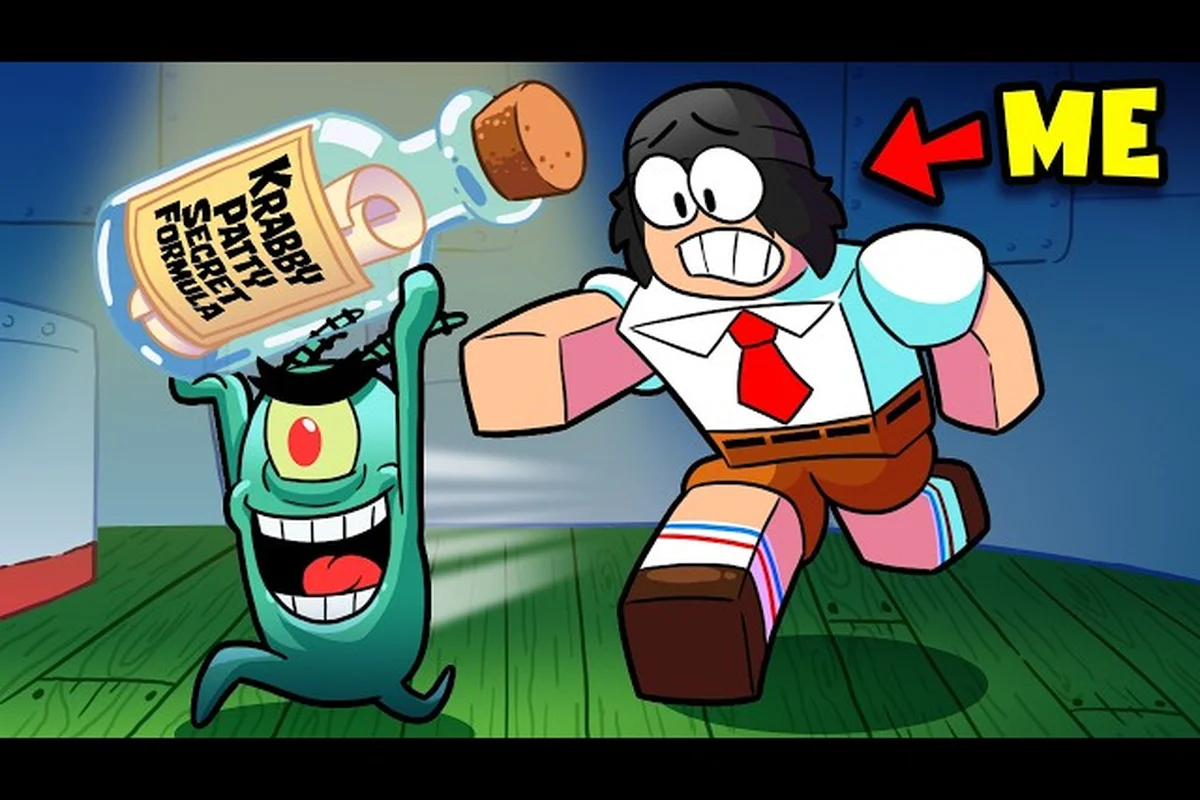
Save the Krusty Krab Smelly customer can derail a shift through stolen tables, squatter behavior, and messy interruptions. Recognizing the warning signs helps you serve customers fast, protect satisfaction, and keep the dining room moving.
Special guests are easier to handle when you read the visible situation instead of assuming a fixed script, and RDMVigilance's community gameplay shows how quickly a normal shift can be interrupted.
Smelly customer behavior and why it matters
The Save the Krusty Krab Smelly customer is more than a nuisance order. A mishandled visit can create extra cleanup, interrupt other customers, and lower the restaurant’s rating, while a clean response can preserve the flow of the entire shift. Understanding this customer’s behavior gives you time to intervene before the problem becomes a full-table emergency.
Several related problems can resemble one another at a glance. A customer may occupy a table without ordering, a customer may steal a table from another group, and a villain may cause the mess that follows. Players who know the difference can respond with the correct action instead of repeatedly guessing. The customer type overview provides helpful context for recognizing special guests and their scripted quirks.
| Customer problem | Main warning sign | Immediate response | Business impact |
|---|---|---|---|
| Smelly customer | Unusual smell or dirty footprint pattern | Clean promptly and keep serving nearby tables | Restores cleanliness and protects satisfaction |
| Squatter behavior | A guest stays without placing a proper order | Check the order state and redirect service | Prevents a table from becoming a bottleneck |
| Table stealing | A customer moves toward an occupied or desired table | Secure seats and prioritize the affected party | Reduces conflicts and keeps groups seated |
| Villain mess | A visible hazard appears, often after an interruption | Handle the hazard before normal service resumes | Prevents cleanup from consuming the shift |
The practical goal is not to stop every disruption instantly. It is to recognize which problem is occurring, protect the customers already in the restaurant, and then remove the source of contamination or conflict. That order of operations matters because switching tasks too often can leave a table unattended while you solve a more dramatic event elsewhere.
Community field notes consistently report the same broad sequence: villains enter, create a specialized interruption, and increase the amount of cleanup or customer management required. Exact timers, star-rating formulas, and spawn schedules are not published in a consistent official dataset, so minute-by-minute claims should be treated as community observations rather than confirmed values.
Three signals to watch immediately
Watch the guest’s position, the nearby tables, and the cleanliness indicators. A Smelly customer is primarily a cleanliness problem, a squatter changes the effective workload around the seating area, and a table thief directly threatens another party’s meal. Seeing these distinctions early is the foundation of serving customers fast without sacrificing customer satisfaction.
| Signal | What it suggests | Why it matters |
|---|---|---|
| Dirty or smelly area near a guest | A cleanup event is active or has just occurred | A nearby service attempt may be judged unfairly |
| Seated guest with no visible order | A squatter-type obstruction | The table may never contribute to normal service |
| Sudden movement between tables | Possible table-stealing behavior | Another group’s meal and rating may be at risk |
| Inspector request or other special prompt | A scripted customer sequence | Standard order flow is temporarily interrupted |
Smelly, squatter, and table-stealing mechanics
The fastest response begins by separating normal customer behavior from scripted obstructions. A squatter can make the restaurant feel crowded even when no one is actively causing damage, while a table thief creates a direct conflict between groups. The Smelly customer then adds a cleaning burden that can make both situations worse. Treating all three as one generic “difficult customer” problem leads to wasted movement and late meals.
For table management, the useful comparison is between preventing access, restoring access, and removing contamination. Prevention means stopping the table theft before it completes. Restoration means returning the seating situation to a usable state. Removal means cleaning the mess that results from the Smelly customer. Each solution addresses a different stage of the disruption.
| Situation | Immediate goal | Secondary goal | Common mistake |
|---|---|---|---|
| Smelly customer | Remove the odor or mess at the affected spot | Keep nearby customers satisfied | Serving through the contamination |
| Squatter customer | Determine whether an order is pending | Free the table or redirect the guest | Assuming every seated guest has ordered |
| Table stealing | Interrupt the movement and protect the table | Preserve both groups’ confidence | Chasing the thief while other meals burn |
| Health inspector request | Read the requested order carefully | Complete the special patty sequence | Ignoring the clipboard and serving normal items |
Community reports describe Man Ray as a particularly dangerous table-related threat because ignoring him can cause him to flip tables, clear customers, and damage the rating. Plankton follows a different pattern: he attempts to steal the secret formula and should be intercepted quickly. Dirty Bubble creates a mess that drains energy until it is mopped. These are distinctive mechanics, so recognizing the source is faster than treating every interruption as ordinary customer impatience.
Order patterns tell you what to prioritize
Observed customer order patterns can help you decide where to stand next. Repeated identical orders should be prepared and delivered in a smooth sequence, while special requests require reading the prompt before acting. A health inspector may demand a specific meal and trigger the nasty patty sequence, which includes taking a patty to the dumpster and serving the result. Preparing that request late can damage an otherwise clean run.
| Order situation | Preparation priority | Best service approach |
|---|---|---|
| Repeated standard order | Batch the process | Keep the same rhythm without needless pauses |
| Mixed table of standard orders | Group compatible items | Confirm each table before moving on |
| Smelly customer near a group | Prepare the meal away from contamination | Clean or redirect before delivery |
| Special inspector order | Pause normal flow | Read the clipboard and complete the exact sequence |
| Customer attempting to steal a table | Protect the original party | Resolve the conflict before resuming deliveries |
The Save the Krusty Krab serve customers fast goal does not mean abandoning difficult guests. It means preventing one customer from multiplying the work for everyone else. Clearing a squatter, securing a table, or dealing with the mess source can restore a faster service pace than repeatedly trying to deliver to a crowded room.
A more complete view of pressure points appears in the hardest customer ranking, which compares disruptive guests by the amount of attention they demand. The key distinction is between delay and direct loss: a squatter may create a delay, whereas a successful table theft can remove a customer and reduce satisfaction immediately.
A practical response plan for the Smelly customer
A dependable response plan has four stages: identify, contain, resolve, and recover. The order prevents you from cleaning one problem while a second problem is already spreading. It also gives you a quick rule when several demands appear at once: first stop active damage, then restore access to tables, then continue meal delivery.
| Stage | Action | Success condition |
|---|---|---|
| Identify | Confirm whether the issue is odor, squatter behavior, table theft, or a villain hazard | The correct mechanic is recognized |
| Contain | Stop the theft or interrupt the active mess before it spreads | No additional customers or tables are affected |
| Resolve | Mop the mess, redirect the squatter, or complete the required special order | The obstruction no longer consumes service time |
| Recover | Resume nearby deliveries and check affected tables | Customers receive meals without a long delay |
The 10-second triage
When several prompts appear, scan the room from the nearest source of damage outward. A dirty area near one guest does not automatically require abandoning every table, but it should be handled before customers eat or receive food in that zone. A table thief needs immediate containment because the affected party may leave. A squatter can wait briefly if every other table has an active order.
-
Active mess: Clean it before the contamination reaches another station.
-
Table theft in progress: Interrupt it and restore the threatened table.
-
Pending squatter: Confirm that no legitimate order is waiting.
-
Special request: Read the full request and prepare it exactly.
-
Normal meal: Continue serving only after the larger threat is contained.
This method improves the Save the Krusty Krab customer satisfaction problem without requiring a rigid route through the restaurant. The room changes faster than a pre-planned path can account for, so priorities should follow consequences. A one-minute delay at a single table is usually less damaging than ignoring an active table flip or allowing a health inspection request to expire.
Cleanliness is part of customer service
A clean dining room is not merely cosmetic in this restaurant. It protects the experience of neighboring customers, reduces the time lost to cleanup, and helps the service rhythm return to normal. When a Smelly customer event appears, treat the affected area as temporarily unavailable until the odor or mess has been handled. This protects nearby customers from receiving food in a poor environment.
Cleaning should also follow a visual sequence. Start with the source, then cover the surrounding area, and only then return to normal work. Community observations indicate that Dirty Bubble’s mess continues to drain energy until it is mopped, which supports handling the hazard rather than pausing for an unrelated task. Exact energy values are unverified, but the direction of the effect is clear from player reports.
For broader cleanup priorities, the table-cleaning customer guide explains how dirt, misplaced tables, and customer pressure can complicate one another. The important lesson is to resolve the source first. Moving the mess without removing its cause allows the interruption to return.
Serving fast without losing customer satisfaction
Fast service is the result of clear priorities and short decision paths. When you know how the Smelly customer, squatter customers, and table thieves create problems, you can act before a small interruption becomes a queue-wide failure. The goal is to protect satisfaction at every table, not to chase a perfect speed score that causes missed special requests.
A practical shift rhythm alternates between service, observation, and recovery. Serve the next clear order, scan for warnings, and interrupt service only when a problem threatens multiple customers. This method keeps normal deliveries moving while giving dangerous events the attention they require. It also makes the sequence easier to learn because each event has a defined beginning, active effect, and resolution.
| Service state | Primary action | Secondary action |
|---|---|---|
| All tables have valid orders | Deliver in the most efficient nearby sequence | Watch for squatters or movement between tables |
| One area is contaminated | Clean the source immediately | Pause deliveries into that area |
| One table is threatened | Interrupt the theft | Reassure the affected party through prompt service |
| A scripted order appears | Complete the requested sequence | Avoid improvising extra items |
| Several major threats overlap | Stop the greatest loss first | Recover the room afterward |
Build a two-order buffer
When the dining room is calm, preparing a small buffer of predictable orders can make a later disruption less costly. Repeated standard requests are ideal candidates because they create less decision overhead than unusual special requests. The buffer should remain modest; preparing too many meals can waste space, delay freshness, or leave you unable to respond when a table changes unexpectedly.
The Save the Krusty Krab serve customers fast approach works best when speed and correctness are treated as the same objective. A fast but incorrect delivery can create a new problem, while a correct delivery that arrives before the room is overwhelmed strengthens the rating. Keep the station ready, but verify the active table before committing to a delivery.
Protect vulnerable tables
A group that is about to lose its table is effectively a group with a delayed meal, even if the food is already prepared. Watch for customers moving between tables and intervene as soon as the theft begins. If a squatter occupies a table needed by an active party, resolve the seating conflict before adding another order to the queue.
Priority customers deserve special attention after the room is stabilized. Their patience and complaints can make a difficult shift more costly, so the priority customer guide provides useful comparison points for deciding which waiting guest should be handled first. Do not let a dramatic villain event cause you to ignore ordinary customers for too long.
| Situation | Correct first move | Why it protects satisfaction |
|---|---|---|
| Ready meal near a threatened table | Secure the table before delivery | The group receives its order without conflict |
| Squatter near an active order | Check and resolve the seating issue | The legitimate order is not displaced |
| Smelly customer near several tables | Clean the affected zone | More customers avoid a poor experience |
| Several impatient guests | Serve the nearest valid order first | Progress becomes visible again |
Fast service comes from protecting the service chain: take an order, prepare it correctly, deliver it to the right table, and return to the next valid request. Every table theft, squatter, or mess breaks that chain. Interrupting the source early is therefore not a distraction from service; it is part of service.
Table-stealing risks and villain interruptions
Table stealing is dangerous because it changes the status of multiple customers at once. The intended group loses its place, the thief gains access to a table, and the room’s seating flow becomes uncertain. Squatter customers create a related but less dramatic problem by occupying capacity without contributing a normal order. Villains add specialized consequences that can damage both furniture and customer confidence.
| Event | Immediate risk | Secondary risk | Best containment |
|---|---|---|---|
| Table stealing | A group is displaced or loses its meal | Customer frustration and lower satisfaction | Interrupt the movement and restore the table |
| Squatter behavior | Seating capacity is blocked | Normal routing becomes slower | Confirm order state and redirect or remove the obstruction |
| Man Ray event | Tables can flip | Customers may be cleared and rating can fall | Respond immediately rather than finishing another task |
| Plankton event | The secret formula may be stolen | Restaurant progress is endangered | Intercept him quickly |
| Dirty Bubble event | A mess drains energy | Cleanup delays nearby orders | Mop the source before resuming service |
| Health inspector request | A specific meal is required | Normal service is interrupted | Read the clipboard and complete the special sequence |
Match the response to the villain
The correct response cannot be generalized as “attack the interruption.” Man Ray, Plankton, and Dirty Bubble create different problems, and each requires the relevant cleanup or counteraction. A player who recognizes the visual cue can act before the reported consequences fully develop. This is especially valuable when the dining room is crowded because a failed interruption can affect several tables at once.
Community notes repeatedly identify Plankton’s formula theft and Man Ray’s table flipping as high-priority events. Dirty Bubble’s cleanup requirement is just as important because the resulting mess slows the entire shift. None of these exact timing windows or numerical penalties are officially published, so players should use the current in-game feedback rather than planning around an exact number of seconds.
Health inspection sequences are not ordinary orders
The health inspector flow is a scripted interruption with its own order logic. Read the clipboard, prepare the requested meal, take the patty to the dumpster, and serve the result. The requested item may not match the normal menu sequence, and treating it like a standard burger order can waste time or fail the customer request.
| Step | Player action | Reason |
|---|---|---|
| 1 | Read the entire inspector request | The special meal is specified rather than guessed |
| 2 | Prepare the requested patty | The result must match the request |
| 3 | Take it to the dumpster | This is part of the scripted sequence |
| 4 | Serve the prepared result | The customer receives the correct special order |
| 5 | Resume normal service | The interruption no longer occupies the station |
The broader customer types and special-guest guide can help distinguish scripted customers from ordinary guests. The inspector sequence is a good example of why a single order routine cannot cover every customer. Some customers are simply seated, while others introduce a required process that temporarily changes your route.
A complete shift checklist for difficult customers
A reliable checklist should cover prevention, active response, and recovery. Prevention means noticing unusual seating, tracking legitimate orders, and keeping the service station clear. Active response means handling the greatest source of loss first, whether that is a stolen table, a villain, or a mess. Recovery means checking nearby tables and rebuilding a clean serving rhythm.
Before starting or continuing a rush, confirm that you know which tables have legitimate orders, which guests are merely occupying space, and which prompt is active. This five-question scan prevents the most common service error: treating every request as if it belongs to the normal meal cycle.
-
Does every occupied table have a valid order?
-
Is a customer moving toward another table?
-
Has a mess appeared near a delivery route?
-
Is a special inspector request active?
-
Which threat can affect more than one customer?
| Shift phase | Main check | Corrective action |
|---|---|---|
| Rush start | Seat assignments and first orders | Prevent squatters from creating an early backlog |
| Mid-rush | Movement between tables and dirty zones | Stop theft and clean contamination early |
| Special request | Clipboard details | Complete the exact inspector sequence |
| Villain event | Villain identity and nearby customers | Use the matching countermeasure |
| Recovery | Seats, cleanliness, and pending orders | Restore a normal service route |
Keep personal notes for recurring difficulties
Record patterns that repeatedly cause failures, such as a particular section of the restaurant where table movement becomes hard to track or an order combination that slows the station. Personal notes are more reliable than vague general tips because they describe your actual route, timing, and screen visibility. A short list of three recurring problems is often enough to create a useful shift checklist.
The most valuable note is the one tied to a cause and action. For example, “protect the outer table during crowded waves” is more actionable than “watch the tables.” Likewise, “clean the dirt before delivering nearby food” identifies both the trigger and the response. These concise rules shorten the time between recognizing a problem and choosing the correct action.
Build a two-layer safety plan
The first layer is prevention: keep legitimate orders visible, monitor table movement, and stop active contamination. The second layer is recovery: inspect affected seats, clean the area, and resume service in a sequence that prevents a repeat. This two-layer approach matters because a successful defense does not guarantee the room is immediately back in order.
| Layer | Focus | Examples |
|---|---|---|
| Prevention | Limit the chance of disruption | Watch squatters, protect tables, mop active mess sources |
| Recovery | Reduce the aftermath | Restore seating, deliver delayed orders, verify nearby tables |
The Save the Krusty Krab Smelly customer is manageable when cleanliness, seating, and customer requests are treated as separate systems. A smell requires cleanup, a squatter requires a seating decision, and a table thief requires direct interruption. Once those categories are clear, the remaining challenge is maintaining speed while a villain or special request changes the routine.
Frequently Asked Questions
What is the best way to handle the Smelly customer without slowing down service?
Clean the affected mess or odor source before delivering nearby orders, because nearby customers may judge the restaurant by the condition around them. If you cannot reach the area immediately, redirect deliveries while dealing with a larger emergency. Community reports suggest that an active mess can continue draining energy until it is handled, so prevention is usually faster than repeated cleanup.
How do you stop a customer from stealing another table in Save the Krusty Krab?
Interrupt the table-stealing behavior as soon as you notice movement toward another table, then restore the intended seating arrangement. Do not assume that completing a nearby food delivery will solve the problem, because the affected party may leave while your back is turned. Combine the defense with prompt service for the displaced group to protect customer satisfaction.
Are squatter customers actually waiting for food?
Not always. A squatter may occupy seating without creating a normal order, so confirm the order state before preparing or delivering food. Treat the guest as a seating obstruction if no legitimate request appears. Redirecting a genuine order takes priority, while a true squatter can be cleared so the table contributes to the normal service flow again.
Should villains always take priority over ordinary customers?
Give priority to villains when they threaten furniture, customers, energy, or a critical objective. A table flip can clear customers and damage the rating, while Plankton’s attempted formula theft threatens restaurant progress. Ordinary meals can resume once the active threat is contained, but avoid leaving waiting groups unattended for too long.
How do special health inspector orders affect a crowded shift?
They interrupt the normal order route and require attention to the clipboard rather than guesswork. Prepare the requested meal, take the patty to the dumpster, and serve the result as part of the scripted sequence. Completing it correctly prevents a failed request from compounding the delays already caused by a squatter, stolen table, or messy interruption.