
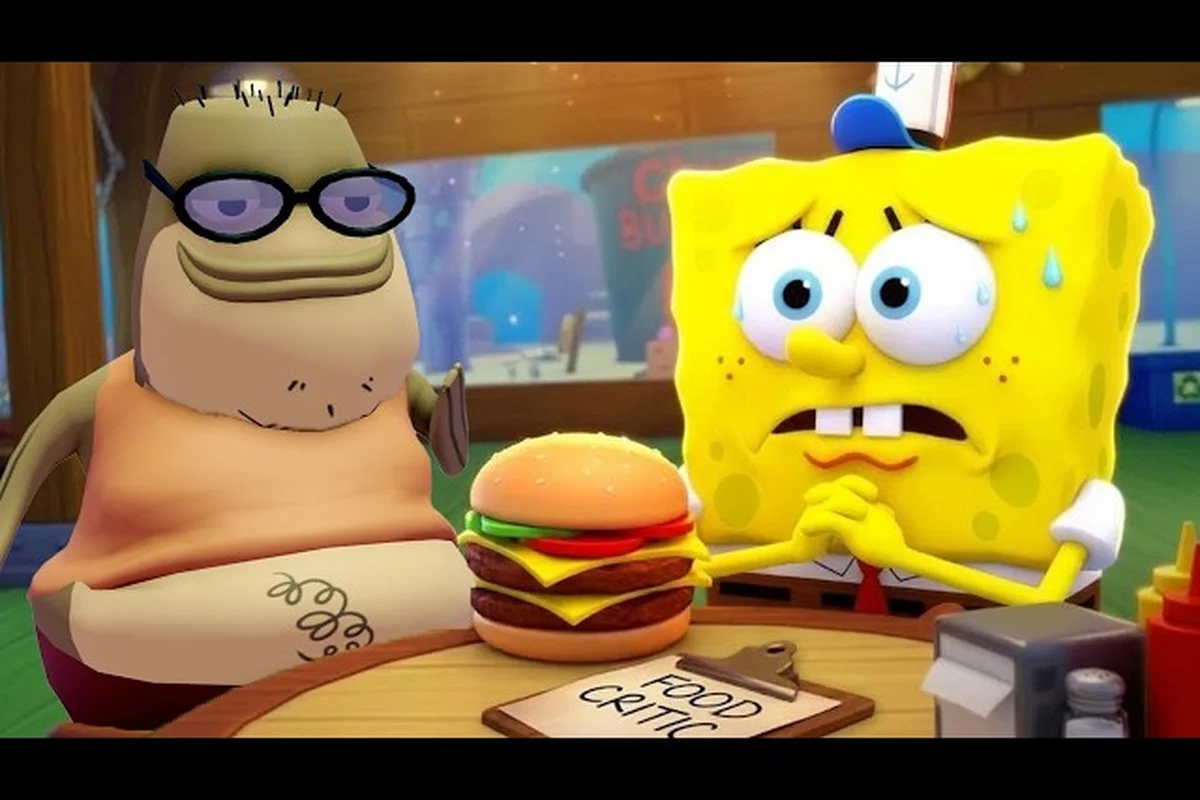
Save the Krusty Krab Tattletale Strangler guide: learn how to recognize this demanding customer, manage busy orders, and keep service flowing when Bubble Bass or an anchovy rush appears. The key is to treat the Tattletale Strangler as a pressure test rather than a normal queue customer: prioritize quick ticket clearing, watch the cooking stations for order bottlenecks, and reserve enough attention for special requests such as Bubble Bass’s order and the anchovy rush, where delayed preparation can cause the whole shift to collapse.
Identifying the Save the Krusty Krab Tattletale Strangler
The Save the Krusty Krab Tattletale Strangler is a customer who rewards careful observation and preparation rather than blind speed. His name suggests a forceful personality, but community reports provide more useful evidence than assumptions: visible behavior, order demands, and patience reactions are the practical signals to watch. Exact timers, spawn rates, and reward values are not published consistently, so this guide avoids presenting unverified formulas as fixed rules.
Approach the encounter as a pattern-recognition problem. Note when he appears, what the kitchen already has running, and how many other customers are waiting. A calm workstation makes it easier to satisfy a difficult order without wasting ingredients or missing another guest. That matters because the Tattletale Strangler often creates pressure through overlapping needs rather than through one isolated task.
| Observable feature | Practical meaning | Best response |
|---|---|---|
| Forceful or impatient demeanor | The order may require a broader sequence of tasks | Complete early prep before accepting more work |
| Complex requested items | Multiple stations may be needed | Identify every station before starting |
| Limited tolerance for delay | A partially finished order can waste time | Finish the full sequence in one focused burst |
| Overlap with other guests | Station congestion can increase errors | Prioritize station readiness, not appearance alone |
Community field notes identify the Tattletale Strangler alongside Bubble Bass, Old Man Jenkins, Dr. Gill, Smelly, and other named customers, but they do not establish official patience values. Treat individual behavior as observed customer context that can change after updates. For a wider comparison of disruptive guests, see Save the Krusty Krab hardest customers.
Reading the situation quickly
Begin by scanning the order from start to finish. Do not assume that the most visible component is the only requirement. Check whether the order uses the grill, fryer, drink station, or another preparation area, then look for a pickup or plating step. This prevents the common mistake of starting immediately and discovering halfway through that the customer needs something from a station that cannot safely run another task at the same time.
Player footage also provides context for the broader set of unusual restaurant personalities. The What If I Become Every Villain in Save the Krusty Krab video by Zaku shows how recognizable characters can become central to a player’s routine, although it should not be used as a source for exact numerical mechanics.
A three-part customer read
Use a simple three-part assessment before committing to the Tattletale Strangler order: first, match the customer’s bubble, drink, and special component to the Bubble Bass order; then plot the route through the stations, checking whether the grill, fryer, drink dispenser, and condiment station can handle each task in sequence; finally, commit and keep the route moving. If the order includes the anchovy rush, treat the anchovy preparation as a distinct station task rather than assuming it can be folded into the normal frying sequence. This approach prevents a Bubble Bass order, Old Man Jenkins request, or anchovy rush from being handled as one vague bundle.
-
Read: Identify the dish, drink, special component, and any visible demand.
-
Route: Decide which stations the order will visit and which can operate in sequence.
-
Commit: Finish the route without pausing for a less demanding customer unless the order is clearly lost.
This method keeps your attention on the restaurant rather than the customer’s animation, turning each demand into a predictable sequence of station tasks. For example, a Bubble Bass order can be routed from the drink dispenser to the fryer, grill, and condiment station without crossing back through the line; an Old Man Jenkins request or anchovy rush still follows that same planned route, with the anchovy task handled at its own station. Maintaining that route prevents momentary pressure from forcing a costly station switch, so customer animations remain visible while you preserve throughput and keep the Tattletale Strangler order moving.
Preparing for the Tattletale Strangler order
Preparation produces the largest advantage in Save the Krusty Krab Tattletale Strangler encounters. Since no official energy cap, burn threshold, or order-generation formula is publicly verified, build a buffer based on what you can see rather than a fixed number of spare ingredients. The goal is to reduce travel and decision time while the order is active.
Start with the stations nearest your normal serving path. Confirm that the required equipment is clean, available, and not occupied by another order. Then review the most common failure in similar customer encounters: a partial preparation that must be abandoned. If an order has several components, map the sequence in your head before touching the first ingredient.
| Preparation stage | What to check | Reason it matters |
|---|---|---|
| Ingredient staging | Required components are present and reachable | Prevents repeated trips and substitution decisions |
| Equipment readiness | Grill, fryer, and drink station are usable | Reduces waiting caused by avoidable congestion |
| Order parsing | Dish, drink, and special request are understood | Prevents serving the wrong combination |
| Completion check | Every visible component is present | Protects against partial-order waste |
| Next-customer scan | The counter still has manageable demand | Creates breathing room before the next rush |
Pre-commitment staging is the useful term here: put the order in a state where the next required action is obvious. Because the game’s official patience data is not available, this practical readiness matters more than a memorized number. It also helps when Save the Krusty Krab Old Man Jenkins arrives, because a clear workstation lets you decide which order deserves immediate attention.
Build a station-by-station route
Write down the path mentally from ingredient pickup to final handoff. For example, a burger-plus-drink order may require a grill component, a fresh bun, and a drink, but the exact sequence depends on the active order. Do not universalize one menu combination. Instead, identify what this customer visibly requests and route those components in the most efficient order.
Use three operational states when assigning a route for each order in Save the Krusty Krab Tattletale Strangler: Ready, Queued, and Committed. For a Bubble Bass order, mark an order Ready only when its required ingredients and equipment are already available; use Queued when multiple station tasks remain; and use Committed once production has begun, so the order can be finished without restarting. This keeps station-by-station routing tied to the order’s actual state rather than forcing every customer through a fixed sequence.
-
Ready: Ingredients and equipment are prepared before the customer’s order becomes active.
-
Queued: Several station tasks are required, so finish them in the shortest practical sequence.
-
Committed: The order is in progress; finish the remaining station rather than restarting.
Do not abandon a Committed order for a different customer unless the situation is clearly unrecoverable. Switching from a Committed Bubble Bass order to a new request can undo station work, waste prepared ingredients, and create a longer queue than the interruption solved. If a customer changes an order during production, first check whether the remaining components can still be completed in sequence; otherwise, preserve the Committed order and handle the new request only when the current order reaches final handoff.
What not to pre-make
Do not fill the restaurant with speculative food. Community observations do not support a reliable rule for predicting his exact dish or arrival time. Pre-making the wrong item creates clutter, removes flexibility, and may leave a station unavailable for a simpler customer. Prepare flexible components, such as standard ingredients or drink stock, and wait for the actual order before cooking anything specific.
Handling Bubble Bass and Old Man Jenkins
Save the Krusty Krab Bubble Bass orders can overlap with the Tattletale Strangler, making station management the central challenge. The Save the Krusty Krab Bubble Bass order is not officially documented in a complete table, so the safest method is to read the request directly and work backward from the required stations. Do not rely on a generic customer routine that may have changed.
Bubble Bass and Tattletale Strangler should be treated as different scheduling problems. One may demand immediate action, while the other may require a longer, multi-stage route. The key is not to compare their personalities but to compare their station footprints. Start the task that can be completed cleanly before congestion develops, while keeping enough attention on the other guest to avoid losing progress.
| Customer | Main risk | Strong response |
|---|---|---|
| Save the Krusty Krab Tattletale Strangler | A demanding order competes with several station tasks | Route the order in one uninterrupted sequence |
| Save the Krusty Krab Bubble Bass | A specific request may be easy to overlook | Read the order twice and confirm the special component |
| Save the Krusty Krab Old Man Jenkins | Another urgent customer can interrupt the route | Finish a short task first, then resume the longer order |
| Tattletale Strangler plus Bubble Bass | Both may need the same equipment | Sequence tasks by earliest bottleneck, not by visual urgency |
When comparing the Save the Krusty Krab Bubble Bass with a normal guest, focus on complexity. If Bubble Bass’s order has fewer stations and can be completed without blocking a shared appliance, handle it first. If both orders require the same station, begin the one whose earlier component can be completed without leaving a station in a shared state.
Manage pressure without guessing timers
The available community evidence does not provide a consistent patience timer for these customers. A player may notice that one customer appears less tolerant, but that observation is not a universal countdown. Do not build strategy around an exact number of seconds unless a current source provides it. Instead, watch visible feedback: a changed animation, a repeated request, a flashing indicator, or a customer leaving.
This approach also prevents timer-based overconfidence, where players stretch one order beyond the safe window because they expect a bonus. The safer response is to secure a complete order first. If the cash routine is the real goal, the Save the Krusty Krab fastest cash method can help separate efficient service decisions from speculative optimization.
Protect the counter queue
A clean queue is more valuable than a heroic attempt at every customer. Before accepting the next order, check the number of active station tasks. If two long orders already need the grill or fryer, avoid starting a third that requires the same equipment. Complete the most advanced stage of one order, then reassess.
Apply the limit by counting only unfinished orders that currently occupy a station: a patty on the grill, fries in the fryer, or a drink waiting for pickup. For example, if two burgers are grilling and the next Tattletale Strangler order needs that grill again, hold it at the queue until one burger reaches plating. This prevents grill and fryer congestion from turning the Save the Krusty Krab Bubble Bass order into an unattended pileup.
-
One long route active: Start a short route if it does not conflict.
-
Two conflicting routes active: Finish the stage nearest completion.
-
Three or more active routes: Stop adding complexity and stabilize the current sequence.
This limit is not an official difficulty setting or a hidden bonus condition. It is a practical congestion-control method for handling the Save the Krusty Krab Tattletale Strangler and other active orders: instead of starting another long route, keep the grill and fryer from competing for the same attention, reduce task switching, and make the next plating action clear when the kitchen becomes busy.
Surviving an anchovy rush
A Save the Krusty Krab anchovy rush compresses several requests into a short period, so the central challenge is throughput without errors. The Save the Krusty Krab anchovy rush should be handled with station lanes, not a single queue. Keep preparation, cooking, and handoff conceptually separate so that completed components are not lost in the middle of a larger wave.
Official details for the Save the Krusty Krab anchovies event remain limited. Public community notes mention Halloween content added in October 2026, including a Bikini Bottom Halloween theme and a Flying Dutchman encounter, but they caution that encounter mechanics are not consistently documented. Do not infer exact spawn schedules or guaranteed rewards from that evidence.
| Rush pressure | What to prioritize | What to postpone |
|---|---|---|
| Early wave | Easy complete orders and station availability | Optional or speculative preparation |
| Middle wave | Orders using different stations | Repeated station changes |
| Late wave | Finishing partial orders and collecting payment | Starting low-priority extras |
| Equipment conflict | One order per shared appliance | Parallel use of the same station |
| Customer conflict | Complete the most advanced route | Resetting an almost-finished order |
Create three parallel lanes
Divide your attention mentally among preparation, production, and handoff when handling a Save the Krusty Krab Tattletale Strangler order. Preparation means checking the recipe requirements, freeing the correct station, and gathering every ingredient before the order enters production. Production covers the active cooking process, including the Tattletale Strangler’s preparation and its anchovy rush demands. Handoff means verifying that the finished dish matches the request—especially its toppings and anchovy level—and reaches the correct customer without delaying the next order.
This arrangement prevents a common rush mistake: finishing a dish, then wandering back to the start of the route. Once an order enters production, keep the next step visible. If a customer becomes difficult, decide whether to complete that customer first or allow a simpler order to use a nonconflicting station. Never let both queues occupy the same equipment at once.
Use a safe reset point
If an order is interrupted, choose a safe reset point where little work is lost. A component that can be discarded and remade may be safer than a nearly complete item with an uncertain request. The exact rule depends on the visible order, because no official error-cost table is available. The principle is to limit the amount of time and food committed before a mistake becomes expensive.
For seasonal context, the Save the Krusty Krab update log can help identify whether the current event changed the customer mix. Compare the event overview with what appears in your own matches, because community footage and official updates may not document every mechanical detail.
Priority guide for busy restaurant shifts
The Save the Krusty Krab Tattletale Strangler is most difficult when customers compete for the same limited workstation. Priority should therefore come from order complexity, equipment conflict, and visible patience feedback. Appearance should be a final tiebreaker, not the entire decision.
A useful priority stack is: first, assess how many independent actions a Tattletale Strangler requires, since splitting buns, preparing the patty, and adding toppings creates a longer sequence than a nearly finished order. Next, check whether those actions will tie up the grill or prep space needed by the Save the Krusty Krab Bubble Bass order or another Strangler; preventing station congestion saves more time than merely starting a customer quickly. If customer impatience is building, advance the order by one level because visible feedback can turn a manageable delay into a conflict escalation.
-
Recover an active order: Finish the stage closest to completion.
-
Clear a shared bottleneck: Free the grill, fryer, or drink station.
-
Serve a short route: Produce a complete order with minimal movement.
-
Prepare a long route: Stage ingredients before it reaches service pressure.
-
Accept optional work: Handle it only when no conflict exists.
| Priority | Decision question | Action |
|---|---|---|
| 1 | Can this order be finished in one short sequence? | Complete it before accepting new work |
| 2 | Will it conflict with an active station task? | Wait or route the other order first |
| 3 | Is an order already partly complete? | Finish that stage before restarting |
| 4 | Is the customer visibly reacting negatively? | Escalate the order one priority level |
| 5 | Is there spare capacity and no conflict? | Start preparation for the next customer |
Match the strategy to the shift
During a normal shift, use extra time to prepare and protect a clean counter. During a crowded period, focus entirely on completed orders and conflict-free stations. If an event introduces special customers, avoid assuming that every Halloween-related order follows the same rules as the standard restaurant. Event behavior can be contextual and may not be fully documented.
The Save the Krusty Krab event rewards overview is useful for checking limited-time goals, but event objectives should not override safe order completion. A reward is never worth accumulating if unfinished orders cause the queue to collapse. Read the objective, set a realistic target, and stop taking optional work when the same stations are needed for regular customers.
Avoid the most common mistakes
Starting without reading the full order is the clearest error in the Krusty Krab kitchen. Skipping a Tattletale Strangler ticket can hide extra burger ingredients, anchovies, or a Bubble Bass substitution, forcing a replacement and creating a station conflict when the mistaken item reaches assembly. Read the entire request, identify each component, and confirm special requirements before prep begins; a correctly read order saves both ingredients and the station handoff.
Overserving a nearly complete order can also waste momentum. If the order is close to completion, finishing it may be more efficient than abandoning it for an easier request. The exception is an obvious mismatch: continuing a wrong order usually creates more waste.
Serving customers by visual intensity alone is unreliable because the customer’s animation does not reveal the actual order length. An angry-looking customer may request a short Tattletale Strangler with only a few burgers, while a subdued customer may place a route-heavy order involving multiple stations, anchovies, or a Bubble Bass substitution. Treat the visible ticket, its ingredient list, and the customer’s order type as the primary information, then match the route to the required prep sequence rather than reacting to expressions or apparent urgency.
A repeatable service loop
A reliable loop has four stages, each solving a different failure point in the Save the Krusty Krab shift: identify every requirement, commit to a workable station order, complete that route without unnecessary interruption, and verify the finished order before accepting the next customer. For example, a Tattletale Strangler ticket can pull fryer, grill, and drink components into one dependency chain; resolving the longest station requirement first prevents a blocked grill from delaying the entire Krusty Krab handoff. This loop is especially useful when the anchovy rush overlaps with a Bubble Bass order or Old Man Jenkins, because each reset exposes which station, ingredient, or timing step is creating the bottleneck.
-
Scan: Read the customer and map the required stations.
-
Sequence: Choose the order with the clearest completion path.
-
Execute: Finish one route without unnecessary interruption.
-
Audit: Confirm every component before handoff and then reassess the queue.
Repeat this loop after every completed order. It keeps the strategy grounded in the current restaurant rather than a fixed customer script. The result is more consistent service during a Save the Krusty Krab anchovy rush and a calmer response when the Tattletale Strangler, Bubble Bass, or Old Man Jenkins arrives together.
Advanced timing and event considerations
Efficiency comes from reducing uncertainty, not reacting at the last instant. Community reports suggest that the Tattletale Strangler is one of several notable customers, yet there is no verified schedule for when he appears. This makes reactive preparation safer than trying to reserve a fixed number of customers for one difficult order.
| Claimed detail | Verification status | Best use |
|---|---|---|
| Exact customer patience seconds | Not consistently published | Do not use as a fixed deadline |
| Tattletale Strangler arrival rate | No confirmed formula | Observe the current session |
| Bubble Bass order composition | Not documented in a stable table | Read the current request |
| Halloween customer spawn schedule | Limited public evidence | Check current event information |
| Relative customer difficulty | Community observation | Use as a planning hint only |
Read changes after updates
Game updates can alter customer behavior, menu requests, or event conditions. After a patch, recheck the order flow rather than assuming that a previously successful sequence still works. The Save the Krusty Krab Man Ray guide is particularly relevant during Halloween periods because the Flying Dutchman and other villain encounters share the same seasonal context as the anchovies event.
Community footage may reveal presentation details, but it should not override current in-game evidence. A clip recorded under an older build might show a different order or event state. Use footage to understand what to look for, then confirm the live behavior in the current version.
Optimize the route, not the character
The Tattletale Strangler demands a complete routine rather than a special trick. Clean stations reduce interruptions, ingredient staging reduces backtracking, and clear priority rules reduce task switching. Those benefits apply to every customer, which makes them especially valuable when a Save the Krusty Krab Bubble Bass order and a Save the Krusty Krab Old Man Jenkins order overlap.
Keep a small mental queue divided by station. A simple record might look like this: “Drink ready, grill active, fryer open.” Because the game’s exact order-service metrics are not confirmed, this lightweight tracking system is preferable to a spreadsheet of invented formulas. It also reduces the mental load created by a mixed-customer bottleneck.
Know when to stop optimizing
A complete order is the immediate goal. Optional efficiency should be attempted only when the active queue contains no conflict and no visible warning. If a customer is about to leave or an order is nearly complete, finish that task before starting a new one. Chasing a theoretical bonus at the expense of the active order can reduce the value of the entire shift.
The best Tattletale Strangler routine is therefore straightforward: prepare early, read carefully, use one station lane per order, and finish the route you have started. The same habits make Bubble Bass and Old Man Jenkins easier to manage, while a clean station strategy provides the resilience needed for a Save the Krusty Krab anchovy rush.
Frequently Asked Questions
What is the best way to handle the Tattletale Strangler customer?
Handle the order by reading every component, mapping the required stations, and completing the route without unnecessary task switching. Prepare ingredients before the order becomes urgent, use visible customer reactions instead of invented timer values, and avoid starting another order that requires the same appliance. Consistency matters more than a complicated special strategy.
How do I identify a Save the Krusty Krab Bubble Bass order?
Read the displayed request carefully, especially any special component that distinguishes it from a standard order. Public sources do not provide a complete and stable order chart, so memorize one fixed recipe at the expense of others. Confirm the dish and drink before serving, and sequence the order around any equipment already in use.
Should I serve Old Man Jenkins before the Tattletale Strangler?
Choose based on the station route rather than character appearance alone. If Old Man Jenkins has a short, conflict-free order, finishing it can free attention and a workstation. If his order competes with the Tattletale Strangler for the grill or fryer, complete whichever active order is closest to handoff. Visible reactions should override a generic priority list.
What is the best response during a Save the Krusty Krab anchovy rush?
Divide the rush into preparation, production, and handoff, then avoid using the same station for two orders simultaneously. Finish nearly completed orders first, keep short orders moving, and stop taking optional work when equipment conflicts increase. Public evidence does not establish exact rush timers or spawn schedules, so adapt to the live queue and current event version.
Are Tattletale Strangler patience and spawn values confirmed?
No. The available community field notes do not provide consistent published values for his patience, energy cost, daily arrival rate, or reward calculation. They are useful for identifying the character and understanding general behavior, but exact seconds and percentages should not be presented as official. Current gameplay observation and verified update information are the safest references.